

What Makes a Tractor ‘Best for Farming’ in India?
The largest or most costly tractor is not the best tractor for farming. It is the tractor that suits your land, your crop, and your everyday routine of work.
Why do tractor requirements vary across crops and land sizes?
A tractor that is good in wheat might not be fully efficient in wet paddy soil. Orchard agriculture requires close turning, and haulage requires crude pulling energy. That’s why tractor requirements are never a one-size-fits-all guideline you can follow.
Small farms focus on fuel efficiency and manoeuvrability, whereas medium farms need balance and power without burning diesel. Large farms demand strength, durability, and compatibility with heavy farm implements. Understanding this difference is the first step toward picking the right tractor.
Key factors farmers should evaluate before buying
Before asking which tractor is best for agriculture, pause and look at your own setup:
- Soil type – Dry, sandy, black cotton soil, or wet fields all behave differently
- Farm size – Acreage directly impacts power needs
- Implements required – A tractor is only as useful as what you attach to it
These three factors shape your tractor’s daily workload and long-term performance.
How Much Horsepower Do You Need for Farming?
What is tractor horsepower & why does it matter?
Tractor horsepower decides how much work your machine can realistically handle. Insufficient power slows the work and puts stress on the engines. Excessive power equates to excessive expenditure on fuel.
The objective is to match the purpose with power.
HP range for different farm sizes
20-30 HP – Small farms, orchards, and light work.
30-45 HP – Multi-crop farms and medium farms.
45-60 HP – Big farms, heavy farming, and haulage.
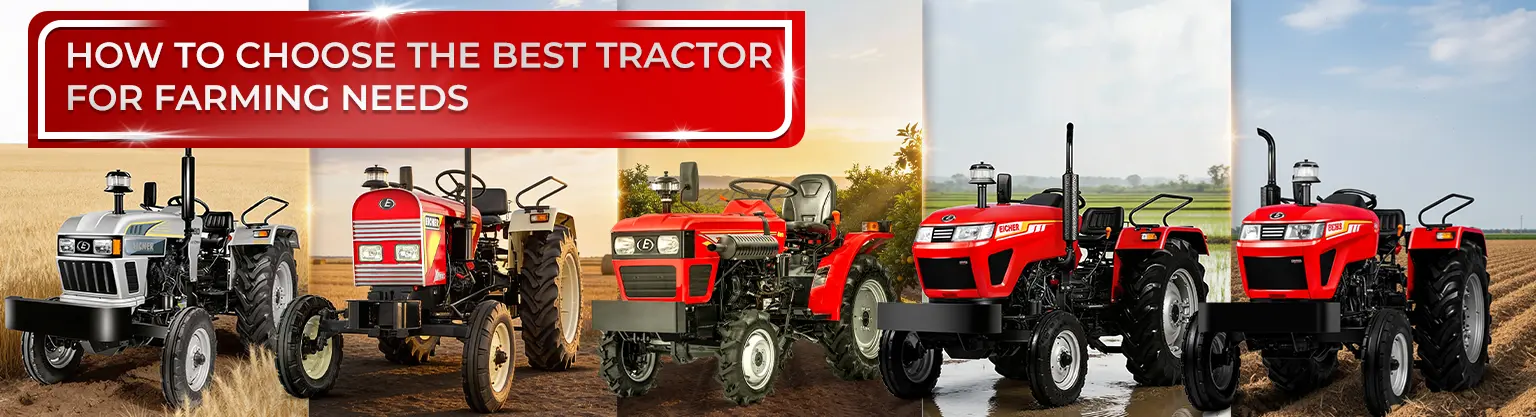
An example of this is the use of compact Eicher Tractor models, such as the Eicher 241 or Eicher 242, in smaller farms and the mid-range Eicher 380 in multi-crop farm work. To meet heavier loads, the Eicher 551 4WD PRIMA G3 or Eicher 557 4WD PRIMA G3 models work comfortably.
How does HP affect fuel efficiency, traction & implement compatibility?
Choosing the right HP ensures you don’t overpay for diesel while maintaining enough ‘backup torque’ for tough soil. The increased horsepower permits increased implements, but it must have adequate weight balance and traction. A properly matched HP tractor works more smoothly, burns less fuel and safeguards the engine and implements against wear.
Best Tractors for Agriculture: Choosing by Farming Type
Which tractor is best for agriculture in India?
The real truth is, it depends on what you cultivate, how much of the land you cultivate and what type of work you perform during the year. Eicher Tractors is a reputable Indian brand that has a reputation for manufacturing tough and fuel-efficient tractors that are meant to work under the real-time farming conditions in India.
Tractors for row crops (wheat, maize, pulses)
Row crops need steady speed and compatibility with seed drills, cultivators, and the tractor harrow. Mid-range tractors like the Eicher 333 and Eicher 380 are commonly preferred because they balance power and fuel use.
Tractors for wet fields & paddy cultivation
Wet soil demands traction and stability. Tractors that are heavier with superior grip are more reliable.
Models such as the EICHER 480 2WD PRIMA G3 / EICHER 480 4WD PRIMA G3 (45 HP) provide greater power to be used in rotavators, puddlers, and trolley. The 4WD model is especially beneficial in deeper and softer soil, where 2WD tractor types are not very effective.
The Eicher 485 can also be considered a good alternative because it has powerful hydraulics and equal distribution of weight, which are more appropriate in puddling and levelling tasks.
Tractors for orchards, vineyards & horticulture
In this case, the size is more important than brute power. Tractors such as the Eicher 241 have close turning and easy inter-row handling.
Tractors for multi-crop & mixed farming
If you grow more than one crop in a year, flexibility is key. Mid-range tractors that support a wide list of tractor implements are usually the safest choice.
Mini Tractors for Small Farms – What to Look For
Best mini tractor features for agriculture
Mini tractors like the Eicher 188 and Eicher 251 are purpose-built machines for small farms.
Look for:
- Compact body for narrow fields
- Low turning radius
- Strong PTO for attachments
Which mini tractor attachments should farmers consider?
The right mini tractor attachments for farming can multiply productivity:
- Mini rotavator
- Light cultivator
- Small harrow
- Sprayer attachment
These attachments help small farmers finish work faster without hiring extra labour.
Benefits of mini tractors vs traditional large tractors
Mini tractors cost less to run, consume less fuel, and are easier to maintain. For small landholdings, they often outperform larger machines simply because they fit the work better.
Complete Tractor Implements & Attachments List for Indian Farming
Why do implements matter more than the tractor itself?
When paired with the right implements, a tractor becomes a complete solution, delivering better performance, better results, and more value from every operation.
Essential tractor attachments for farming
Here’s a practical tractor attachments list most Indian farmers rely on:
- Rotavator
- Cultivator
- Disc harrow
- RMB Plough
- Seeder
- Leveller
- Trolley
- Super Seeder
Together, this complete tractor implements list can support year-round farming.
Various agricultural implements used across crops
Different crops need different tools:
- Intercultivation tools for weed control
- Ridger & bund maker for row crops
- Straw reaper for post-harvest work
These various agricultural implements help farmers manage every stage of the crop cycle.
Tractor accessories for boosting farm efficiency
Simple tractor accessories for farming, like weights, a canopy, a hydraulic top link, and PTO-driven tools, can make long workdays easier and safer.
Cultivation Tools Every Farmer Should Know
What are cultivation tools?
The cultivation tools are used to loosen the soil, control weeds and keep the fields organised during the season.
Role of the cultivator tool in soil preparation
A cultivator tool is used to loosen soil, eliminate weeds and enhance aeration, which preconditions healthy growth of crops.
When to use a harrow vs. a cultivator
After ploughing, a tractor harrow is used to break clods and level the field, and a cultivator is used to work more deeply and loosen the soil. Being aware of which to apply and when will save time and fuel.
Implements needed for each farming stage
- Land preparation – Plough, harrow, rotavator
- Sowing – Seeder, Super Seeder
- Intercultivation – Cultivator
- Harvest assistance – Trolley, straw management tools, fertiliser sprayer
How to Match Your Tractor with the Right Implements?
Why is matching HP with implements critical?
Big implementations put strain on the engine. Small tools use up opportunities. Horsepower matches your tractor with matching implements to enhance efficiency.
PTO compatibility & weight balance
The strength and weight balance of the PTO ensures smooth operation and prolonged life of the machine.
Mistakes farmers make when choosing attachments.
The main mistakes are related to overloading the tractor or neglecting soil conditions. Both lower the performance and raise the costs of repair.
Maintenance Tips to Keep Your Tractor Farming-Ready
1. Daily checks before field operation
Simple habits like checking oil, coolant, and tyre pressure can help prevent breakdowns.
2. Implement a maintenance checklist
Clean and inspect attachments regularly to avoid uneven work and damage.
3. Seasonal storage tips for implements & accessories
Proper storage extends the life of expensive implements and keeps them ready for the next season.
Power Up Your Farming with Eicher Tractors
Choosing the right tractor isn’t about chasing trends. It’s about understanding your farm, your crops, and your tools. Eicher tractors are designed with Indian farming realities in mind, with durable engines, practical power ranges, and compatibility with a wide range of implements.
Pick wisely, match your tools carefully, and your tractor won’t just work your land; it’ll grow with your farm.