

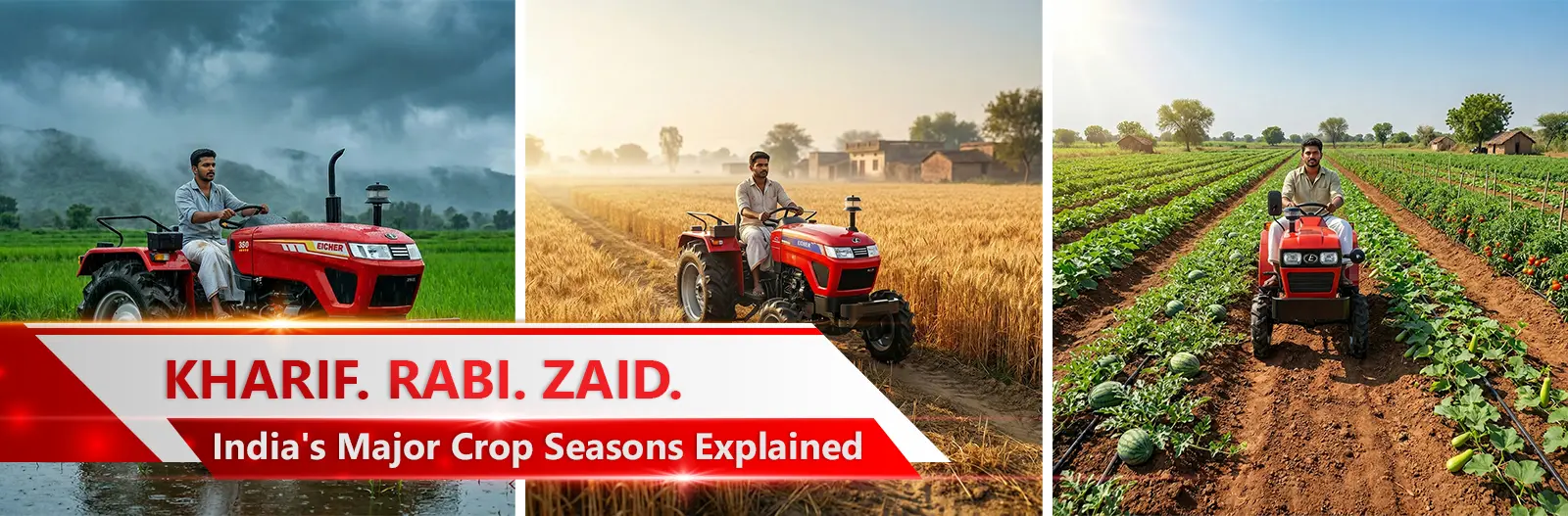
Have you ever wondered how India feeds such a large population despite varying weather conditions? The answer is within its properly arranged crop calendar. Indian agriculture is closely connected with seasonal cycles. Farmers do not plant and harvest randomly, but according to a pattern that nature creates.
Knowing crop seasons and types of crops in India will give one a sense of it all as to why some vegetables are more abundant during particular seasons and how farmers schedule irrigation, planting, and harvest.

What Are Crop Seasons in India? Types of Cropping Seasons Explained
Crop seasons simply refer to the periods during which specific crops are grown and harvested. In India, these agricultural seasons are shaped by climatic factors like rainfall, temperature, humidity, and the monsoon cycle. Since the country experiences diverse weather patterns, farmers align their cropping choices accordingly.
The Three Major Crop Seasons in India
India’s agricultural calendar is divided into three main agricultural seasons:
- Kharif season (monsoon crops)
- Rabi season (winter crops)
- Zaid season (short summer crops)
Together, the Kharif, Rabi, and Zaid crop seasons ensure year-round agricultural activity and efficient land use.
Kharif Crop Season (Monsoon Crops)
The Kharif season is one of the most important cropping seasons in India. It begins with the onset of the southwest monsoon, typically around June, and crops are harvested between September and October.
These crops depend heavily on rainfall, making the monsoon a make-or-break factor.
Climate Requirements for Kharif Crops
Kharif crops thrive under:
- High rainfall: Kharif crops require consistent and well-distributed rainfall during their growth period, as they depend heavily on monsoon showers for water supply.
- Warm temperatures: These crops grow best in temperatures ranging between 25°C to 35°C, which supports faster germination and healthy plant development.
- Humid climate: A humid atmosphere helps maintain soil moisture levels, which is essential for crops like rice that need standing water.
Major Kharif Crops in India
Some of the most commonly grown kharif crops in India include:
- Rice
- Maize
- Cotton
- Soybean
- Groundnut
- Sugarcane
Rice, in particular, dominates this agricultural season due to its high water requirement.
Farming Activities During the Kharif Season
This season involves multiple critical farming activities. Key activities include:
- Preparing land before monsoon arrival: Farmers plough and level fields in advance to ensure proper soil structure and water retention.
- Sowing seeds as the rains begin: Timely sowing is critical to utilise the initial monsoon rains for better crop establishment.
- Managing weeds and pests during growth: Regular monitoring and control measures are essential to protect crops from losses.
Timing is everything here. A delay in rainfall can disrupt the entire cycle.
Role of Tractors in Kharif Farming
Modern farming relies heavily on mechanisation. Tractors help farmers:
- Prepare fields quickly: Tractors help in faster ploughing and soil preparation before the monsoon window closes.
- Sow seeds efficiently: Modern seed drills attached to tractors ensure uniform seed placement and spacing.
- Control weeds and manage crops: Implements like cultivators and weeders reduce manual labour and improve crop health.
They help save time, reduce manual labour, and improve operational efficiency, especially during the tight monsoon window.
Rabi Crop Season (Winter Crops)
Once the monsoon retreats, the Rabi season takes over. Sowing begins around October or November, and harvesting happens between March and April.
Unlike Kharif crops, Rabi crops don’t depend much on rainfall. Instead, they rely on cooler temperatures and irrigation.
Climate Requirements for Rabi Crops
Rabi crops need:
- Cool weather during growth: Rabi crops require lower temperatures (10°C–25°C) for proper germination and development.
- Low rainfall: Excess rainfall can damage these crops, so dry conditions are preferred during growth stages.
- Reliable irrigation systems: Since rainfall is limited, irrigation sources like canals and tube wells are essential.
This is where canals, wells, and modern irrigation techniques play a crucial role.
Major Rabi Crops in India
Popular rabi crops in India include:
- Wheat
- Mustard
- Barley
- Gram
- Peas
Wheat is the star of this season and a staple food across the country.
Farming Activities in Rabi Farming
Key tasks during this season include:
- Ploughing and soil preparation: Fields are prepared after the monsoon to retain residual moisture.
- Seed drilling: Seeds are sown using machines for uniform depth and spacing.
- Irrigation management: Water is supplied at critical growth stages to ensure healthy crop yield.
- Harvesting at the right maturity stage: Timely harvesting prevents losses due to over-drying or shattering.
Since rainfall is limited, farmers must carefully manage water resources.
Tractor Mechanisation in Rabi Farming
Tractors make Rabi farming smoother by helping with the following:
- Ploughing and levelling land: Helps create an even seedbed for better crop growth.
- Precise seed sowing: Ensures optimal plant population and reduces seed wastage.
- Fertiliser application: Enables uniform nutrient distribution across fields.
- Harvesting support: Reduces time and labour required during peak harvest periods.
Zaid Crop Season (Short Summer Crops)
Zaid is a short-duration cropping season that plays an important role in maximising land use. It falls between March and June, right after the Rabi harvest and before the Kharif season begins.
This short window is used to grow quick-maturing crops.
Characteristics of Zaid Crops
Zaid crops typically:
- Have a short growing period: These crops mature quickly, usually within 60–90 days.
- Depend on irrigation: Since rainfall is minimal, artificial irrigation is essential for growth.
- Include mostly fruits and vegetables: Many Zaid crops are perishable but highly profitable.
They help farmers make the most of otherwise idle land.
Major Zaid Crops in India
Common Zaid crops in India include the following:
- Watermelon
- Muskmelon
- Cucumber
- Vegetables
- Fodder crops
These crops are especially popular in regions with good irrigation facilities.
Farming Activities in Zaid Farming
Since the season is short, farmers focus on:
- Quick land preparation: Fields are prepared immediately after Rabi harvest to save time.
- Efficient irrigation: Frequent watering is necessary due to high summer temperatures.
- Fast harvesting cycles: Crops are harvested quickly to fit within the short season window.
Tractor Mechanisation in Zaid Farming
Even in this short season, tractors play a big role in the following:
- Preparing soil quickly: Helps farmers utilise the short gap between the Rabi and Kharif seasons.
- Managing irrigation layouts: Assists in setting up irrigation channels efficiently.
- Supporting rapid harvesting: Reduces turnaround time and labour dependency.
They help farmers maximise output in a limited time.
Key Differences Between Kharif, Rabi, and Zaid Crops
While all three seasons are part of India’s agricultural system, they differ in several ways:
| Basis | Kharif Crops (Monsoon) | Rabi Crops (Winter) | Zaid Crops (Summer) |
| Sowing Time | June–July (with monsoon) | October–November | March–April |
| Harvesting Time | September–October | March–April | May–June |
| Climate Requirement | Warm, wet, and humid | Cool and dry | Hot with irrigation support |
| Water Dependency | High | Moderate | High |
| Types of Crops in India | Rice, maize, cotton, soybean | Wheat, mustard, barley, gram | Watermelon, cucumber, vegetables |
| Regions Dominant | High rainfall regions | Irrigated northern plains | Areas with irrigation facilities |
Tips for Farmers to Plan Crops Across All Seasons
Follow the Crop Calendar
Aligning sowing and harvesting with seasonal patterns ensures better yield and reduces risk.
Use Proper Irrigation Methods
Techniques like drip and sprinkler irrigation help conserve water and improve efficiency, especially during the Rabi and Zaid seasons.
Choose Suitable Crop Varieties
Selecting crops suited to local soil and climate conditions makes a big difference in productivity.
Adopt Modern Farming Equipment
Mechanisation, especially tractors, boosts efficiency and reduces manual effort.
Choose the Right Tractor for Every Season
Different farming activities require different tractor capabilities. Picking the right one helps save fuel, time, and labour. Choosing the right tractor can help improve efficiency across different farming seasons. Explore suitable options with Eicher Tractors.
Conclusion
India’s crop seasons represent a well-balanced system that keeps the country’s food supply steady throughout the year. Each season has its own rhythm, challenges, and rewards. When farmers align their practices with seasonal cycles, they can improve productivity and efficiency. To explore tractors suited for different farming needs, visit: Eicher Tractors All Models in India | Check Features & Specs