

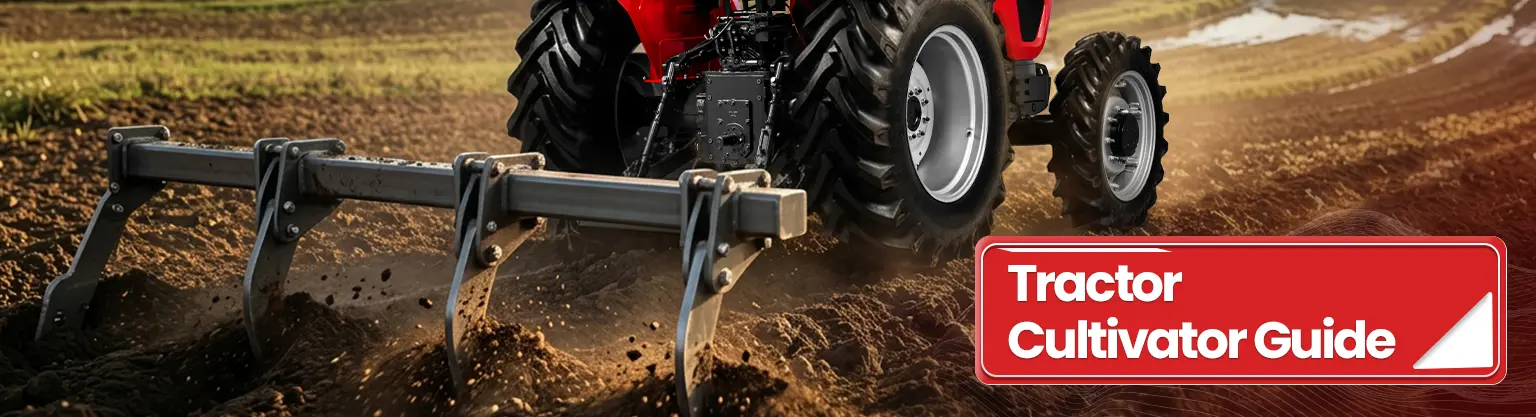
The real game-changer in the field has been the evolution of tractor implements. They’ve turned what used to be weeks of toil into a few hours of efficient work, massively boosting productivity. Among all the tools in a farmer’s shed, the tractor cultivator stands out as perhaps the most essential implement you’ll ever own. It’s the all-rounder of the field.
What is a Tractor Cultivator?
Understanding Tractor Cultivator as a Versatile Implement Used for Soil Preparation, Weed Control, and Improving Crop Growth
A cultivator in tractor operations is a secondary tillage implement. It’s the tool that gets your soil “seed-ready.”
While a plough breaks the heavy initial ground, the cultivator comes in to finish the job. It’s designed to break down soil clods, stir the soil, and clear out those stubborn weeds that steal nutrients from your crops.
By stirring the dirt, the cultivator improves aeration, basically letting the soil breathe. This creates a fine, soft seedbed that’s perfect for root development. In India, you’ll see a tractor-driven cultivator on almost every farm because it’s simple to use, incredibly efficient, and does three jobs at once: tilling, weeding, and aerating.
Key Features of Tractor Cultivators
Strong Frame, Adjustable Tynes, and Efficient Design Make Cultivators Suitable for Different Soil Conditions
- A good cultivator needs to be tough. Most modern versions come with a heavy-duty carbon steel frame that won’t bend or snap when it hits a hidden rock.
- One of the best bits is the adjustable tynes. Depending on whether you’re working with soft soil or stubborn, hard-packed clay, you can adjust the spacing and depth to get the perfect finish.
- You can choose between rigid tynes or spring-loaded versions, and they usually come in sizes ranging from 9 to 17 tynes. The size you pick mostly depends on your tractor cultivator attachment needs and the horsepower of your machine.
Easy Attachment and Compatibility with Tractor Hydraulic Systems Improve Operational Efficiency
- Nobody wants to spend three hours fiddling with bolts in the heat. Thankfully, the tractor cultivator attachment is designed for a standard 3-point linkage system. The process is straightforward: back the tractor up, hitch it on, and you’re ready to go.
- Because it’s fully integrated with the tractor’s hydraulic system, you’ve got total control from the driver’s seat. You can lift the implement smoothly at the end of a row or drop it deep into the earth with a flick of a lever.
Types of Tractor Cultivators in India
Different Types of Cultivators Designed for Specific Soil Conditions, Crops, and Farming Requirements
Not all soil is created equal, so we’ve got different types of cultivators in India to match:
- Rigid Cultivator: These are the “tough guys.” They don’t flex, making them perfect for hard soil and deep tillage where you need to force the tynes down.
- Spring-Loaded Cultivator: These are the most popular. If your field is stony or uneven, the springs allow the tynes to buck upward when they hit an obstacle, preventing damage to the implement.
- Disc Cultivator: Think of these as a plough tractor cultivator. They use discs to slice through tough crop residue and soil.
- Rotary Cultivator: Often called a rotavator, this uses rotating blades to create an incredibly fine seedbed in one pass, though it’s technically a combined tillage tool that handles both breaking and finishing in a single pass.
- Mounted vs Trailed: Mounted ones are hitched directly to the 3-point linkage, while trailed ones are pulled behind, usually reserved for massive industrial-scale farms.
Uses of Tractor Cultivator in Farming
Soil Preparation, Weed Control, and Seedbed Formation Make Cultivators Essential for Every Farming Operation
- The first and foremost tractor cultivator use is about breaking compacted soil. Over time, soil gets packed down by rain and machinery; the cultivator loosens it up so water can actually reach the roots.
- It’s also your best weapon for weed control. Instead of using harsh chemicals, the cultivator physically uproots weeds before they can go to seed.
- Plus, it’s great for “interculture” operations, basically driving between rows of standing crops like sugarcane or cotton to keep the soil loose and weed-free.
- Finally, if you’ve spread manure or fertiliser, a quick pass with the cultivator mixes that organic matter deep into the soil where it can actually do some good.
Benefits of Using Tractor Cultivators
Improved Soil Health, Better Crop Yield, and Reduced Labour Make Cultivators a Valuable Investment for Farmers
The real cultivator uses in agriculture come down to your yield. When soil is properly aerated, roots grow deeper and stronger. Better root systems mean your plants can drink more water and withstand dry spells much better.
Compared to manual hoeing, a tractor-driven cultivator saves you days of labour costs. It’s faster, more uniform, and reduces the overall cost of farming in the long run.
Multi-Purpose Functionality Allows Farmers to Perform Multiple Tasks with a Single Implement
One of the biggest perks is that you don’t need five different machines. A single cultivator can handle tilling, weeding, and mixing. It works across sandy, loamy, or clay soils, making it the most versatile farming tool in your inventory.
Role of Eicher Tractors in Cultivator Operations
How Eicher Tractors Provide the Right Power, Stability, and Efficiency for Cultivator Usage
You can have the best cultivator in the world, but if your tractor is struggling, you’re wasting fuel. This is where Eicher tractors really shine. They deliver high torque at low revs, exactly what’s needed when pulling tynes through thick, compacted earth.
Eicher’s hydraulic systems are also incredibly precise, giving you fine-tuned depth control so you aren’t digging too deep or too shallow. Whether you’ve got a 23 HP orchard tractor or a 50 HP powerhouse, there’s a cultivator match that’ll work with perfect stability.
How to Choose the Right Tractor Cultivator
Selecting the Right Cultivator Based on Tractor HP, Soil Type, and Farming Requirements
You need to match the cultivator tractor price and size to your specific needs. Here’s how you can choose:
- Check your HP: A 35 HP tractor handles a 9-tyne cultivator well, while 45–50 HP machines can comfortably run 11 to 13 tynes.
- Soil Check: If your land is full of rocks, skip the rigid models and go for spring-loaded.
- Hydraulics: Make sure the hitch category matches your tractor’s linkage system.
Tips for Using a Cultivator Efficiently
Best Practices to Improve Performance and Increase the Life of Your Cultivator
To get the most out of your machine, keep these tips in mind:
- Watch your speed: A steady, moderate speed ensures the tynes actually stir the soil rather than just bouncing over it.
- Check the bolts: Cultivators vibrate a lot. Regularly check that the tynes and bolts are tight.
- Clean it up: After a day in the dirt, hose it down. Mud traps moisture, and moisture leads to rust.
- Don’t overload: If the soil is bone-dry and hard as a rock, don’t force it. Wait for a bit of moisture or do a shallower pass first.
Conclusion
At the end of the day, a tractor cultivator is a tool that protects your soil and your profit. By improving aeration, killing weeds, and preparing the perfect seedbed, you’re giving your crops the best possible start.
While the cultivator tractor price might seem like an upfront cost, the savings in labour and the boost in yield make it pay for itself in no time. When you pair this essential implement with the reliability of Eicher tractors, you’re setting your farm up for success.
To explore Eicher tractors built for cultivator operations,
visit eichertractors.in or call 1800 2020 200.