

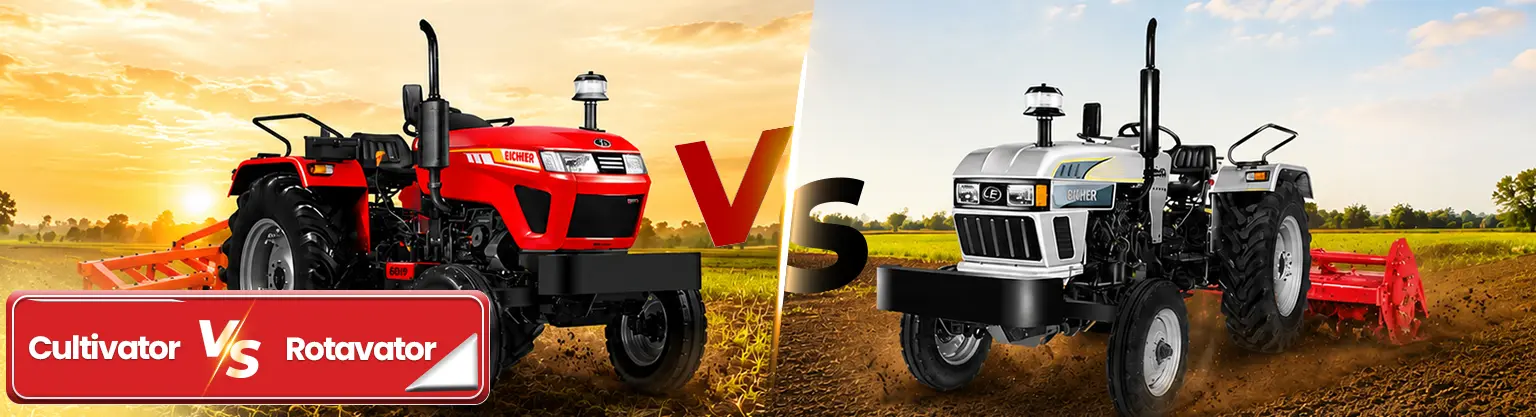
One of the most common questions farmers ask is the classic comparison: cultivator vs. rotavator. Both are absolute staples in modern agriculture, but they are completely different tools meant for completely different jobs. If you use the wrong one at the wrong time, you end up wasting precious diesel, losing time, and messing up your soil structure. Let’s figure out which tool your land actually needs right now.
What is a Cultivator?
Understanding Tractor Cultivator as a Secondary Tillage Tool Used for Soil Aeration, Weed Control, and Seedbed Preparation
Think of a cultivator as your go-to tool for routine maintenance and soil conditioning. A cultivator is used for shallow tillage and soil loosening. It works using tynes, strong, spring-loaded steel teeth, to break the top layer of soil, fracturing the top crust so air and water can actually flow down into the root zone.
The cultivator is an absolute lifesaver when it comes to weed removal and mixing fertilisers right into the soil profile. Because it treats the soil with a lighter touch, it is ideal for maintaining soil structure and interculture operations, meaning you can drive it between your standing crop rows to rip out weeds without damaging your actual plants.
What is a Rotavator?
Understanding Rotavator as a Powerful Rotary Tillage Implement Used for Deep Soil Preparation and Fine Seedbed Formation
If the cultivator is a precise tool, the rotavator is pure muscle. A rotavator uses rotating blades to cut, mix, and level soil deeply. This machine hooks directly into your tractor’s PTO shaft. The engine spins a series of curved, heavy-duty blades at high speeds, breaking down and mixing everything thoroughly as they go. The beauty of this machine is that it performs both primary and secondary tillage at the exact same time.
If you are dealing with a field that is filled with heavy crop residue, like tough paddy stubble or sugarcane leftover, the rotavator is your ideal partner. It breaks hard soil and prepares fine seedbeds in a single pass, saving you from making three different trips across the field with a plough and a harrow.
Key Differences Between Cultivator and Rotavator
Comparison Based on Working Mechanism, Depth, Efficiency, and Farming Applications Helps Farmers Choose the Right Implement
To really understand the difference between cultivator and a rotavator, you have to look at what is happening beneath the surface.
- A cultivator typically works at a depth of 2-4 inches for lighter, everyday field maintenance. A rotavator typically works at a depth of 4-8 inches depending on soil conditions and implement size.
- A cultivator uses tynes that slice through the dirt passively as the tractor moves forward, while a rotavator uses rotating blades that actively chew up the ground.
- A cultivator is used for maintenance, weeding, and aeration, whereas a rotavator is used for complete soil preparation from scratch. If you want a perfectly powdery, fine soil finish compared to cultivator results, the rotavator is the clear winner.
Cultivator vs Rotavator – Which is Better for Your Farm?
Choosing Between Cultivator and Rotavator Depends on Soil Type, Crop Requirement, and Farming Stage
It completely depends on what your field looks like right now.
- For soft or already prepared soil, a cultivator is better because it gets the job done quickly without overworking the land or burning too much diesel. But if you are dealing with hard, compacted soil that hasn’t seen water in months, a rotavator is more effective at breaking that brutal crust.
- You also have to look at your current stage of farming. A cultivator is ideal for weed control and interculture between your crop lines. A rotavator is best for initial land preparation before sowing, ensuring your seeds have a smooth, debris-free environment to sprout.
For farmers primarily using cultivators for interculture, soil aeration, and routine field preparation, tractors in the 44–49 HP segment often provide the ideal balance of power and fuel efficiency. Models such as the Eicher 450 4WD PRIMA G3 and Eicher 551 4WD PRIMA G3 are well-suited for handling cultivator operations across different soil conditions while maintaining productivity and operator comfort.
Advantages of Using a Cultivator
Low Cost, Fuel Efficiency, and Easy Maintenance Make Cultivators Ideal for Regular Farming Operations
There is a reason why almost all cultivators use in agriculture centre around saving money. Because it doesn’t use the PTO system, it requires less power and fuel from your tractor. Your engine can run at a lower, steady RPM, which keeps your diesel bills manageable.
Cultivators are also incredibly durable and come with much lower maintenance and affordable cost. There are no complex gearboxes, chains, or seals to leak oil, just solid steel tynes that rarely break. This makes them highly suitable for small and medium farms where keeping overheads low is everything.
Advantages of Using a Rotavator
Deep Tillage, Better Soil Mixing, and Faster Field Preparation Make Rotavators Highly Efficient for Intensive Farming
The rotavator makes its mark when the weather window is constantly shifting. It will loosen the ground effectively and, in a few minutes, will level off a rough, uneven field into a perfect seedbed. This will create a fine crop seedbed for better germination, which will give an even crop growth throughout the seedbed.
It can perform several tasks simultaneously, which greatly decreases the number of implements required. A separate tiller, harrow, and leveller are not required. It saves time as it can perform several tasks in a single pass, which works well on large farms and commercial farming.
Since rotavators place a higher load on the PTO system and hydraulics, choosing a tractor with sufficient power becomes important. For intensive tillage, residue incorporation, and deep seedbed preparation, higher-horsepower tractors such as the Eicher 650 CRDI 4WD PRIMA G3 offer strong PTO performance and great lifting capacity that can comfortably manage heavy-duty rotavator applications.
When to Use Cultivator vs Rotavator
Understanding the Right Farming Stage and Application Helps Maximize Efficiency of Each Implement
- Use a cultivator for secondary tillage and crop maintenance once the main field prep is already out of the way. Save the rotavator for primary tillage and land preparation when you are opening up a fresh field for a new season.
- A cultivator works best in row crops and interculture because its narrow fingers can slide right between your crops to clear out weeds. A rotavator is ideal for pre-planting and soil levelling across wide, open fields.
Many successful farmers actually use both tools together for better results, running the rotavator first to create a beautiful seedbed, and then switching to the cultivator later in the season to manage the weeds.
Role of Eicher Tractors in Cultivator and Rotavator Operations
How Eicher Tractors Provide the Power, Compatibility, and Efficiency Needed for Both Cultivator and Rotavator Usage
No matter which implement you choose to hook up, you need a tractor that won’t struggle when the soil gets tough. Both implements are fully compatible with Eicher Tractors, providing you with complete flexibility.
They have strong hydraulics, and the handling of the implement is smooth, which facilitates lifting and lowering heavy tools at the end of each row. Eicher’s simple yet rugged design makes it possible for it to work well on various farms and soil types, ensuring you can complete your work without worrying about a breakdown midway through.
How to Choose the Right Implement for Your Farm
Key Factors Like Soil Type, Farm Size, Budget, and Tractor Power Should Guide Your Decision
- Type of soil (hard vs soft): A rotavator is required for sticky clay soils, but a cultivator is good for lighter, sandy soils.
- The size of the farm and workload: A rotavator is more suitable for large-scale commercial fields, while a cultivator works well on smaller plots.
- Cost of investment and maintenance: Rotavators have a higher initial investment but relatively low maintenance costs; Cultivators – relatively low initial investment, and maintenance costs are almost negligible.
- Tractor hp compatibility: Rotavators must run safely at the PTO speed for which the tractor was designed.
- Type of crops grown: Root crops love the deep, fine soil of a rotavator, while standard grains and row crops benefit from a cultivator’s weeding abilities.
Matching tractor power with implement size is equally important. Farmers using 5–7 tynes cultivators or lighter rotavators may find tractors such as the Eicher 485 AT and Eicher 450 4WD PRIMA G3 suitable for day-to-day field operations. Larger rotavators and intensive soil preparation tasks generally benefit from higher-power tractors.
Conclusion
Both cultivators and rotavators are important farming tools, and most thriving farms eventually need both. Each serves different purposes in soil preparation, and using them correctly directly improves efficiency and yield. When you pair the right implement with the right machine, the job gets a whole lot easier.
To find the right Eicher tractor for your cultivator or rotavator operations,
visit eichertractors.in or call 1800 2020 200.
Disclaimer: The information provided in this article is intended for general informational and educational purposes only. Readers are advised to verify the latest information with official sources, authorized dealers, or government portals before making any purchasing or financial decisions. The views shared in this blog do not constitute legal, financial, or technical advice.