

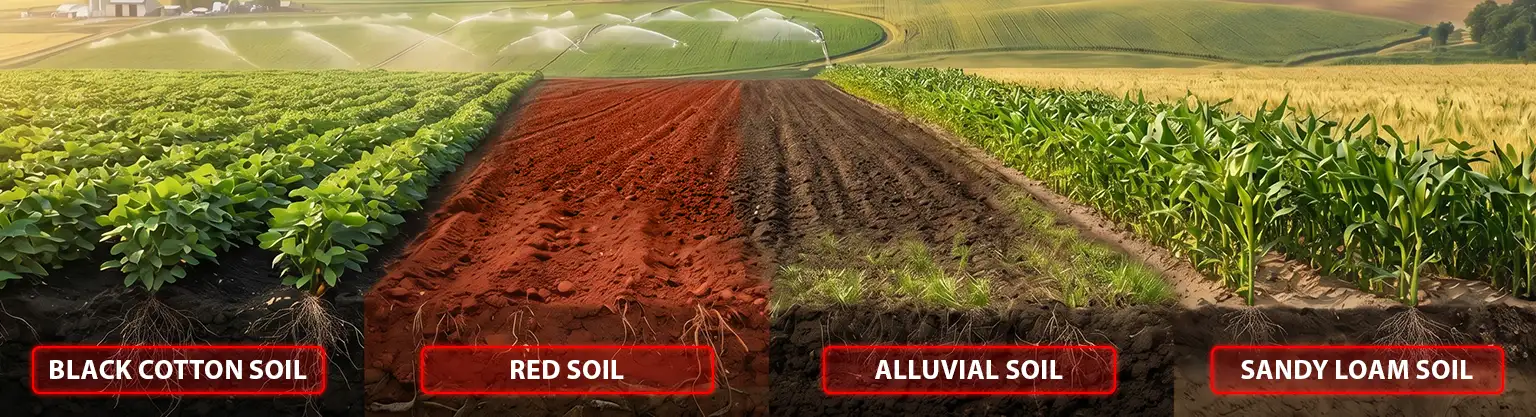
The soil under your feet is an active ecosystem that controls your entire crop. Geography in India is immense and diversified, from fertile northern plains to the sun-soaked Deccan. This variety enables us to have some of the most diversified soil types in India, each with its own rules. It is important to know about different types of soil in India and the uses of soil in agriculture in order to grow and make the best fit between soil and crop.
What is Soil and Why is it Important for Farming?
Understanding Soil as the Foundation of Agriculture and Its Role in Crop Growth and Productivity
Soil is the thin, top layer of the Earth’s surface, formed over thousands of years as rocks weather and break down. But it’s more than just ground-up rock; it’s a mix of minerals, organic matter, air, and water. For a farmer, soil is the warehouse that stores the nutrients and moisture your plants need to survive.
If the soil quality is poor, your farming success is going to be uphill work, no matter how much seed you buy. Different soils have different textures – some hold water like a sponge, while others let it drain away instantly. Because of this, each type requires a specific set of farming techniques and, often, different tractor implements to get the best out of it.
Major Types of Soil in India
India Has Diverse Soil Types Classified Based on Composition, Color, and Formation Across Different Regions
There are 8 soil types in India – Alluvial, Black, Red, Laterite, Desert, Mountain, Saline and Peaty soils according to the Indian Council of Agricultural Research (ICAR). Each one has a unique chemical makeup and physical structure depending on where it’s found.
Understanding these different soil types in India helps you decide whether you should be planting wheat, cotton, or perhaps setting up a tea plantation. When you know your soil, you make better decisions about fertilisers, irrigation, and even which tractor model has the right power-to-weight ratio for your specific land.
Alluvial Soil: Most Fertile Soil for Agriculture
Alluvial Soil Supports Major Crops Like Rice, Wheat, and Sugarcane Due to Its High Fertility and Moisture Retention
Among all the soil types in India, alluvial soil is widely regarded as the most fertile and productive for farming. Found mostly in the vast northern plains and river basins (like the Indo-Gangetic plains), this soil is deposited by rivers over centuries.
- It’s rich in potash, lime, and phosphoric acid, making it a natural powerhouse for plant growth.
- Because it has a fine texture, it’s great at holding onto moisture, which is why it’s the backbone of India’s food security. Since alluvial regions depend heavily on timely rainfall, checking the latest IMD monsoon forecast can help you plan sowing around soil moisture levels.
- The primary alluvial soil crops are rice, wheat, sugarcane, and pulses.
Black Soil (Regur Soil): Best for Cotton Cultivation
High Moisture Retention and Mineral Content Make Black Soil Ideal for Cotton and Dryland Farming
Found primarily across the Deccan Plateau, black soil (or regur soil) is famous for its dark colour and clay-like texture. It’s formed from the weathering of volcanic lava rocks and is packed with iron, magnesium, and lime.
- What makes it special is its self-ploughing nature; it develops deep cracks when dry, which helps in aeration, and becomes sticky when wet.
- The high moisture retention is a lifesaver in drought-prone areas, making it perfect for dryland farming.
- When people talk about black soil uses, the first crop is usually cotton. It’s so good for it that it’s often called black cotton soil. Besides cotton, it’s excellent for soybeans, groundnuts, and citrus fruits.
Red Soil: Suitable for Dry Farming Crops
Red Soil Supports Crops Like Millets, Pulses, and Groundnut with Proper Fertiliser Management
Red soil gets its striking look from iron oxide. You’ll find it mostly in the southern and eastern parts of the country, where rainfall isn’t quite as heavy as on the coast.
- While its natural fertility is lower than that of alluvial soil, it’s very responsive to irrigation and fertilisers.
- It’s a light soil, meaning it doesn’t get as waterlogged. This makes it perfect for red soil crops such as millets, pulses, and oilseeds.
Laterite Soil: Ideal for Plantation Crops
Laterite Soil is Suitable for Crops Like Tea, Coffee, and Rubber with Proper Soil Management
Laterite soil forms in areas with high rainfall and high temperatures (like the Western Ghats). Because of the heavy rain, the nutrients often get washed away, a process called leaching. This leaves the soil acidic and low in fertility.
However, with the right organic matter and fertilisers, it’s the king of plantation farming. Farmers prioritise laterite soil uses for cashew nuts, tea, coffee, and rubber.
Desert Soil: Used for Arid Region Farming
Desert Soil Supports Crops Like Millets and Barley with Proper Irrigation Techniques
As you might guess, this soil is found in the arid regions of Rajasthan and northern Gujarat. It’s sandy, has low organic matter, and doesn’t hold water well at all. But don’t write it off, with the right water management, it can be surprisingly productive.
Desert soil farming focuses on drought-resistant crops. Millets, barley, and some varieties of maize do well here. The key is using precise irrigation techniques to make sure every drop of water counts.
Mountain Soil: Suitable for Hilly Region Farming
Mountain Soil Supports Horticulture Crops Like Fruits, Tea, and Spices in Hilly Areas
This soil varies wildly depending on how high up you are. In the Himalayan regions, the soil is often rich in organic matter (humus) because of all the forest cover, though it can be quite acidic.
It’s the heart of horticulture. Apples in Himachal, tea in Darjeeling, and spices in the Nilgiris – all thrive here. Because of the slopes, terrace farming is the way to go, and you need nimble, stable tractors to navigate those narrow paths.
Saline and Alkaline Soil: Challenging but Manageable
Saline Soil Requires Proper Treatment and Management for Agricultural Use
Found in dry areas or coastal regions where salt builds up, this soil is a bit of a challenge because high salt content can kill most plants. However, with proper drainage and the addition of gypsum, farmers can use this soil. Once treated, it can support salt-tolerant crops like certain varieties of rice and cotton.
Peaty and Marshy Soil: Rich in Organic Matter
Peaty Soil is Suitable for Paddy and Water-Based Crops Due to High Organic Content
In heavy rainfall areas like Kerala or the Sunderbans, you’ll find peaty soil. It’s thick, heavy, and black because it’s packed with decaying organic matter.
- It’s naturally waterlogged, which makes it perfect for paddy (rice) and jute cultivation.
- It might be low in minerals, but its ability to stay wet makes it a specialist soil for water-loving crops.
Role of Eicher Tractors in Different Soil Conditions
How Eicher Tractors Help Farmers Work Efficiently Across Different Soil Types in India
No matter what soil you’re working with, your tractor is the one doing the heavy lifting. Eicher tractor models like Eicher 380, Eicher 480, and Eicher 485 are designed to be the ultimate all-rounders. Their high-torque engines provide the pull needed for heavy black soils, while their fuel efficiency makes them ideal for the long hours required in intensive alluvial farming.
Whether you’re using a disc plough to break hard laterite or a cultivator for soft alluvial beds, Eicher’s strong hydraulics ensure your implements work at the perfect depth. They help in maintaining soil fertility in India by allowing for precise tilling that doesn’t destroy the soil structure, reducing overall costs and keeping your farm profitable.
How to Choose the Right Soil for Farming
Selecting Crops and Farming Methods Based on Soil Type Improves Yield and Efficiency
Once you know your soil types and crop compatibility, you can plan your season.
- Test before you plant: Know your pH and nutrient levels.
- Match your crop: Don’t try to grow rice in desert soil without massive irrigation.
- Manage your water: Heavy soils need drainage; sandy soils need frequent, light watering.
- Use the right tech: Invest in a tractor that won’t bog down when the soil gets tough.
Conclusion
At the end of the day, understanding the soil is about respecting the land. Our agricultural success is built on the variety of soil types in India. From the fertile northern plains to the plantation-rich coasts, each soil type offers a unique opportunity.
To find the right Eicher tractor for your soil and farming needs,
visit eichertractors.in or call 1800 2020 200.
FAQs
1. What are the main types of soil in India?
2. Which soil is best for farming in India?
3. What crops grow best in alluvial soil?
4. Why is black soil suitable for cotton cultivation?
5. How does soil type affect crop production?
6. What is the importance of soil in agriculture?
7. How can farmers improve soil fertility?
8. Which tractor is best for different soil types?
Disclaimer:
This article is intended for general informational purposes only. Soil characteristics can vary significantly within the same region depending on local conditions, land management practices, and environmental factors. Farmers are advised to conduct soil testing and consult local agricultural experts or extension services before making decisions related to crop selection, fertiliser application, irrigation, or farm mechanisation. Tractor selection should be based on individual farming requirements, field conditions, and implement compatibility. Eicher Tractors does not guarantee specific farming outcomes or crop yields based on the information provided in this article.