

TL;DR Summary
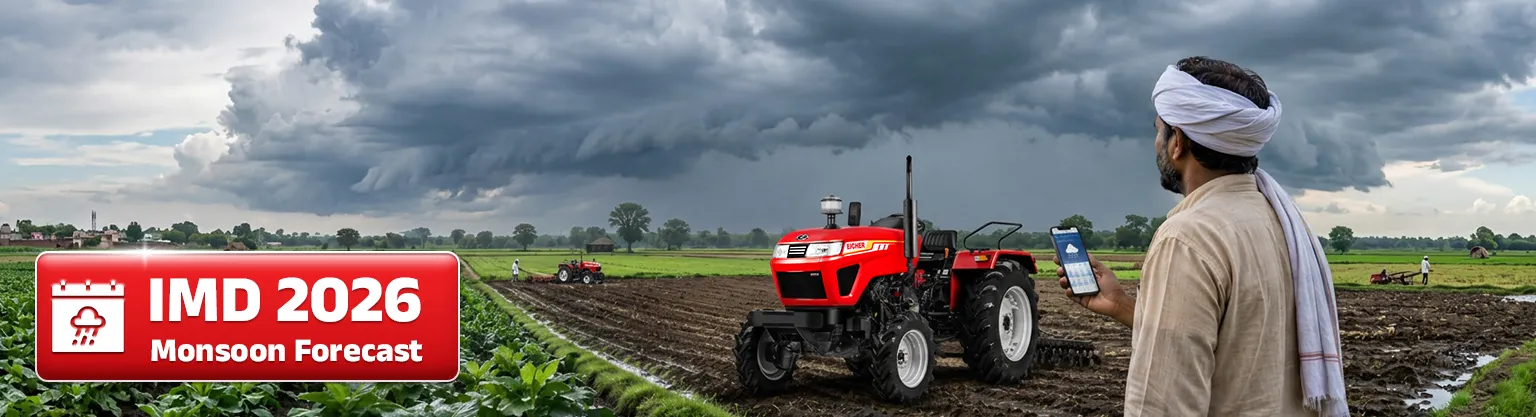
The IMD 2026 monsoon forecast predicts rainfall at roughly 90% of the Long Period Average, raising real concerns for Indian Kharif farming. Uneven distribution is as much a risk as lower total rainfall.
Key takeaways:
- IMD’s 90% LPA forecast signals below-normal rainfall, with uneven regional distribution the key concern
- Maharashtra, Madhya Pradesh, Telangana, and Karnataka farming regions face the highest sowing risk
- El Niño conditions could create long dry gaps between rainfall bursts, compressing the Kharif window
- Pre-monsoon tractor and implement servicing is the single most practical step farmers can take now
Nearly 60% of India’s cultivated land depends entirely on the monsoon, with no backup irrigation for most smallholders. That’s exactly what makes the IMD 2026 monsoon forecast a planning input every farmer needs to act on, not just read.
IMD is projecting rainfall at around 90% of the Long Period Average. For monsoon crops like soybean, paddy, cotton, and maize, that shortfall, combined with erratic distribution, can squeeze the entire Kharif season into a much shorter window. Farmers who prepare early will have the clearest advantage when the rains finally arrive.
Understanding the IMD 2026 Monsoon Forecast in Simple Farming Terms
What IMD’s 90% of Long Period Average Rainfall Forecast Actually Means for Indian Farmers and Agriculture Operations
India’s Long Period Average is the 50-year monsoon rainfall benchmark. The monsoon forecast for Indian farmers at 90% LPA means total rainfall is expected roughly 10% below that level.
But the IMD rainfall forecast for 2026 is about distribution as much as it is about volume. Even 90% LPA rainfall creates problems when it arrives in short bursts with long dry gaps between them. For sowing decisions, uneven distribution is a bigger concern than the total shortfall figure.
Why the 2026 Monsoon Forecast Is Important for Indian Agriculture
Monsoon Timing and Rainfall Patterns Directly Affect Kharif Crop Planning, Sowing, and Farm Productivity
India’s southwest monsoon drives the entire Kharif farming cycle. Delayed onset reduces soil moisture, delays land preparation, and leaves seeds germinating under uneven conditions.
Monsoon crops like paddy, soybean, and maize are most sensitive during the two weeks after sowing. A 10 to 15-day delay in rainfall onset can reduce yields even if total rainfall eventually reaches normal levels.
Suggested Read: Major Crop Seasons in India: Kharif, Rabi, and Zaid
How El Niño Could Affect Indian Farming During the 2026 Monsoon Season
El Niño Conditions May Affect Rainfall Distribution Across Key Farming Regions and Create Additional Pressure on Kharif Crop Planning
El Niño is a warming pattern in the tropical Pacific Ocean that weakens India’s southwest monsoon. The risk isn’t only lower total rainfall. It’s rain that arrives in concentrated spells, separated by extended dry periods.
Maharashtra and Madhya Pradesh soybean belts may face delayed sowing pressure. The Telangana and Karnataka cotton regions could experience moisture stress during weeks of weak rainfall. Paddy-growing areas that depend on a timely onset of the monsoon may experience transplant delays. Faster field response during short rain windows becomes essential in El Niño years.
Farming Regions Likely to Be Most Affected by Weak or Erratic Monsoon Conditions
Central India, Maharashtra, and Madhya Pradesh Soybean Belt Could Face Higher Farming Challenges During Delayed Rainfall
Central India is largely rain-fed, with soybean farmers in Maharashtra and Madhya Pradesh depending on early-June rainfall for soil preparation and timely sowing. Any delay shifts the whole Kharif cycle back.
Soil moisture depletes quickly in dry pre-monsoon conditions. Once the rains arrive late, every workable day carries more weight. Quick field response after the first rains often determines whether a Kharif season performs well or falls short.
How Delayed Monsoon Compresses the Kharif Sowing Window
Farmers May Have Fewer Working Days for Land Preparation, Sowing, and Crop Establishment During Erratic Rainfall Conditions
A normal kharif sowing season spans six to eight weeks. A late monsoon can cut that to four weeks or fewer, while still requiring the same workload to be completed.
Crops sown late establish poorly and yield less. Completing land preparation, sowing, and early crop management in a compressed window requires equipment that works reliably from the first day the fields are workable.
Why Tractor Readiness Matters More During Uncertain Monsoon Conditions
Reliable and Field-Ready Tractors Help Farmers Complete Farming Operations Quickly During Limited Weather Opportunities
After a delayed monsoon onset, many farmers have 24 to 48 hours before the next dry spell. A tractor that fails during this window costs far more than the repair. Choosing the right 2WD vs 4WD tractor for your soil and crop can also decide whether you finish the pass or get stuck.
Fuel efficiency also matters during long, intensive Kharif shifts. A tractor that consumes less fuel per hour meaningfully reduces operational costs when fields are being worked from dawn to dusk to hit the season’s window.
How Farmers Can Prepare Their Tractors Before the Monsoon Arrives
Pre-Monsoon Tractor Maintenance Helps Avoid Breakdowns and Supports Smooth Farming Operations During Kharif Season
A pre-monsoon service removes the most common causes of peak-season breakdowns. Key checks before the rains arrive:
- Engine oil, coolant levels, and visible leak inspection
- Tyre pressure and tread condition for wet, muddy field work
- Battery charge and starter motor function
- Hydraulic fluid levels and lift arm operation
- Brake and clutch responsiveness
These checks take a few hours. Skipping them can cost critical days at the start of the Kharif window.
Suggested Read: Tractor Maintenance Made Easy: Proven Ways to Extend Tractor Lifespan
Farm Equipment and Implements Farmers Should Keep Ready Before Kharif Season
Rotavators, Seed Drills, Cultivators, and Other Implements Help Farmers Complete Sowing Operations Faster
A well-serviced tractor paired with worn implements still slows operations. Before rains arrive:
- Inspect rotavator blades and replace worn ones
- Check seed drill metering units for accurate seed placement
- Confirm cultivator tines are intact and correctly spaced
- Verify all implements match your tractor’s specifications
Suggested Read: Top Tractor Implements & Attachments You Must Have For Farming
Matched, well-maintained implements let farmers use every available hour of good conditions efficiently.
Smart Farming Practices Farmers Can Follow During Weak Monsoon Conditions
Proper Crop Planning, Soil Management, and Timely Field Operations Help Farmers Reduce Weather-Related Farming Risks
Drought-tolerant varieties of soybean, maize, and pulses establish more reliably when rainfall is uneven. These are worth considering for regions facing a below-normal monsoon this year.
Soil moisture conservation helps too. Mulching, avoiding deep tillage before confirmed rain, and timing field operations to actual rainfall windows reduce risk significantly compared to fixed calendar-based planning.
Role of Farm Mechanisation During Short and Unpredictable Sowing Windows
Modern Tractors and Farm Equipment Help Farmers Improve Speed, Efficiency, and Productivity During Kharif Operations
Mechanised field preparation completes land work three to five times faster than manual operations. In a compressed Kharif window, that speed gap often determines whether crops go in on time.
Labour shortages during peak sowing are a persistent challenge in many farming regions. Tractors remove that dependency for the most time-critical operations. When the monsoon is weak, farm mechanisation becomes a vital tool for survival, not just productivity.
Why Eicher Tractors Supports Farmers During Challenging Monsoon Seasons
Reliable Performance for Timely Cultivation, Sowing and Haulage During the Kharif Season
The monsoon season gives farmers a limited window to prepare fields, sow crops and complete other essential operations. Eicher tractors in the 47–50 HP range offer dependable performance for working with compatible implements such as cultivators, rotavators, ploughs and seed drills.
The Eicher 485 AT (47 HP) and Eicher 548 (49 HP) are versatile choices for regular cultivation, sowing, PTO-driven applications and transport work. Their multi-purpose capabilities help farmers manage different Kharif operations with one tractor.
For intensive cultivation and heavier implement requirements, the Eicher 551 4WD PRIMA G3 (49 HP) and Eicher 557 4WD PRIMA G3 (50 HP) provide the power and lifting capacity required to work with a range of compatible agricultural implements. The Eicher 551 Super Plus PRIMA G3 (50 HP) is particularly suited for demanding haulage while also supporting intensive fieldwork and heavy implement applications.
Fuel-efficient performance can help farmers manage operating costs during long working hours, while features such as power steering, oil-immersed brakes and multi-speed and reverse PTO, available on select models, support easier operation and greater application flexibility.
Regular servicing and a pre-monsoon tractor check can also reduce the risk of interruptions during time-sensitive Kharif operations. Farmers can contact their nearest Eicher dealership for service assistance and guidance on selecting the right tractor and implement combination for their crops, soil conditions and workload.
IMD 2026 Monsoon Forecast: Final Preparation Guide for Indian Farmers
The IMD 2026 monsoon forecast points to a season that rewards preparation over patience. Below-normal rainfall and possible El Niño effects leave less margin for slow starts or equipment failures at the wrong moment.
Service your tractor before the first rains. Inspect your implements. Match your crop choices to your region’s rainfall risk. And when rain finally arrives after a delayed start, be ready to work quickly. Farmers who prepare now will manage the 2026 Kharif season with far less risk.
FAQs
1. What does IMD’s 90% LPA monsoon forecast mean for farmers?
2. Which Indian states may be affected most by weak monsoon conditions?
3. How does a delayed monsoon affect Kharif sowing?
4. Why is tractor readiness important before the monsoon season?
5. What tractor maintenance should farmers do before the Kharif season?
6. Which implements are useful during monsoon farming operations?
7. How can farmers prepare for erratic rainfall conditions?
8. Why are tractors important during short sowing windows?
Disclaimer:
The information in this article is based on publicly available weather forecasts, including updates from the India Meteorological Department (IMD), and is intended for general informational purposes only. Weather conditions can change over time and may vary significantly by region. Farmers are advised to follow the latest IMD forecasts, local agricultural advisories, and guidance from their respective State Agriculture Departments before making sowing, irrigation, or crop management decisions. Eicher Tractors does not guarantee the accuracy, completeness, or future outcome of weather forecasts or farming results.