

Quick Overview
Successful mango cultivation depends on timely orchard operations and choosing implements suited to the orchard stage, row spacing and field conditions. Spraying, pruning, and inter-row care each need a different attachment.
Key takeaways:
- Conventional mango orchards commonly use wider spacing of around 7–10 metres, while high-density systems use much closer spacing depending on the variety and management system.
- PTO-driven orchard sprayers can improve spraying efficiency and coverage when correctly selected and calibrated for the orchard canopy and row spacing.
- Inter-cropping between young trees works best with compact implements sized for narrow rows.
- The value of mechanisation depends on the orchard stage and workload. Tractors and suitable implements can support operations from orchard establishment through the bearing years.

Mango orchards take years to bear fruit. Equipment choices made during orchard establishment can influence operating efficiency for many years, so machinery planning should be considered alongside planting layout and spacing.
Mango cultivation in India spans everything from young sapling care to full-canopy spraying. Each stage asks for a different tool. A young orchard needs narrow, careful equipment. A mature one needs reach and power.
This piece walks through the implements that matter at each stage. It covers how to size them to your orchard. It also covers the mistakes that cost growers money before the trees even bear fruit.
Mango Orchard Farming: Where Implements Matter Most
Spraying, weed management, inter-row operations and canopy management can all require significant labour in a mango orchard. Mango orchard farming gets easier once you mechanise these well.
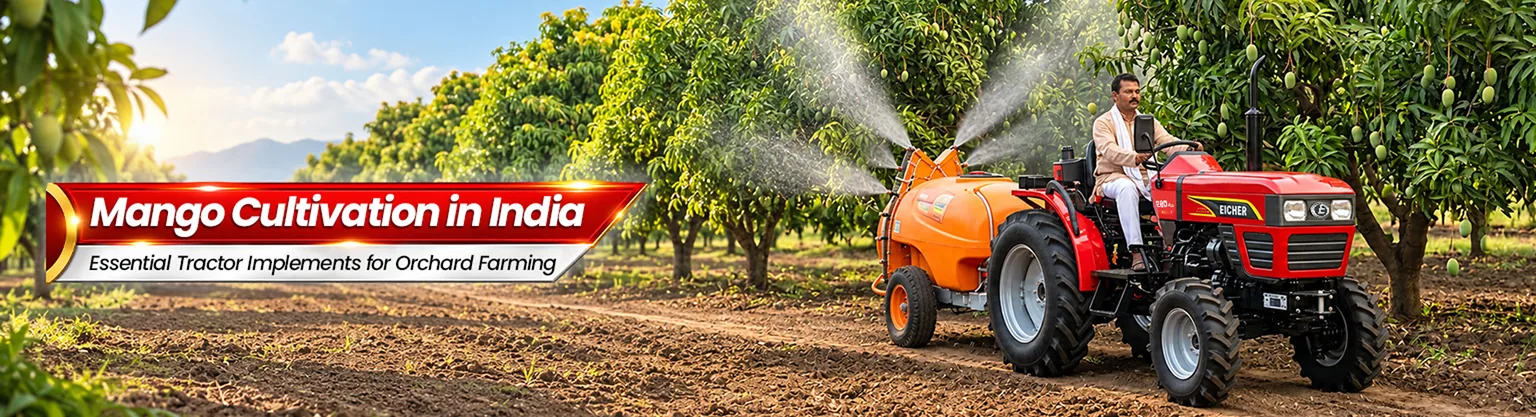
In larger orchards, mechanised spraying can reduce the time and labour required compared with fully manual operations. For mango trees, choose an orchard or air-assisted sprayer suited to the canopy height, density and row spacing. Hand-weeding between rows pulls workers away from harvest-critical tasks at the worst time. Get these three tasks right, and mango cultivation in India becomes far less labour-intensive overall.
Mango Cultivation Process by Orchard Stage
The mango cultivation process moves through distinct stages, and each one changes what machinery you need.
- Planting and establishment (years 1 to 2): orchard establishment, material transport, light inter-row cultivation and careful weed management
- Juvenile growth (years 3 to 4): continued training and canopy development, inter-row management, spraying and mulching where required
- Bearing stage: canopy spraying, fruit and material transport, inter-row management and harvesting support as required. The age at which commercial bearing begins varies with variety, planting material and orchard management.
Essential Tractor Implements for Mango Farming in India
Mango farming in India typically relies on a core set of attachments.
- PTO-driven orchard or air-assisted sprayers for efficient canopy spraying, selected according to tractor PTO requirements, canopy size and row spacing
- Rotary tillers or suitable cultivators for controlled inter-row weed and soil management, operated at an appropriate depth and away from the tree basin/root zone
- Canopy-management and pruning equipment where required, particularly in high-density or rejuvenated orchards
- Trolley for moving fruit, fertiliser, and equipment around the orchard
Together, these implements can support several important mechanised operations in mango orchards, depending on orchard design and management practices.
Suggested Read: Top Tractor Implements & Attachments You Must Have For Farming
Matching Implements to Orchard Size and Spacing
Conventional orchards generally provide wider inter-row space, while high-density systems place greater importance on compact equipment, overall tractor width, turning ability and canopy clearance.
Get this wrong, and equipment either can’t fit between rows or wastes capacity it doesn’t need. Row width, canopy clearance, tractor dimensions and turning space should all be checked before selecting equipment.
How to Choose the Right Orchard Tractor Setup
Match tractor HP to implement load, not to orchard size alone. Compact tractors in the 18–30 HP range can suit many orchard operations where manoeuvrability is important, provided the tractor's PTO output, dimensions and capacity match the selected implement.
Suggested Read: Compact & Efficient 18-30 HP Eicher Tractors for Small Farms
Check PTO compatibility before buying any implement. Confirm turning radius against your narrowest row. Test the setup in your own orchard, not just the dealer’s yard. A tractor that is too large for the available row width or implement requirement may reduce manoeuvrability and increase operating costs, so tractor size should be matched to the actual orchard application.
Suggested Read: What Is Tractor PTO? Meaning, Types, Working and Uses
Mango Orchard Management With Mechanisation
Mango orchard management improves once routine tasks no longer depend entirely on manual labour. With suitable attachments, operations such as inter-row cultivation, mulching, spraying and material transport can be completed more efficiently.
Consistency matters as much as speed. A properly selected and calibrated orchard sprayer can improve the consistency and efficiency of canopy coverage compared with fully manual spraying.
Costs, Labour Savings, and Return Expectations
Mechanisation requires an upfront investment, while the potential return depends on equipment utilisation, labour availability, orchard size and the number of operations performed each season.
- Labour hours drop sharply for spraying and inter-cultivation
- Properly calibrated spraying equipment can help improve coverage consistency and operational efficiency.
- Equipment costs spread across many seasons, not one harvest
Smaller orchards see a slower payback than larger ones running the same equipment more often. Compare annual operating costs, labour savings, equipment utilisation and maintenance expenses before assessing the investment.
Common Mistakes in Mango Cultivation Methods
Mistakes in mango cultivation methods tend to repeat across regions.
- Selecting tractor size without checking row width, canopy clearance, turning space and implement power requirements
- Skipping soil testing before deciding on fertiliser and irrigation setup
- Ignoring early tree training and appropriate canopy management, especially in high-density planting systems
- Ignoring implement compatibility with the tractor’s existing PTO and hydraulics
Conclusion
There’s no single formula for mango cultivation in India, only a fit between orchard stage, spacing, and equipment. Match implements to where your trees actually are in their lifecycle, not where you expect them to be next year.
Start with the task costing you the most labour today. Build your implement list from there, one stage at a time.
Disclaimer: This article provides general information on mango cultivation and tractor implements, which should not replace professional agricultural or financial advice. Because orchard conditions, specific Eicher model compatibility, and regional yields vary, farmers must consult authorised Eicher dealers and local horticultural experts to tailor solutions to their land.